Leaves and Laptop, Vector: Graphics & Illustrations for Real Publishing
As a blog designer who’s built over 200 content sites—and shipped thousands of editorial graphics—I opened Leaves and Laptop, Vector expecting another decorative clipart piece. Instead, I found a quietly versatile graphic design asset that bridges lifestyle warmth with digital professionalism. It’s not flashy—but it’s effective. That distinction matters when your readers scroll past dozens of visuals before landing on your article, newsletter, or lead magnet.
A First Impression That Builds Trust, Not Distraction
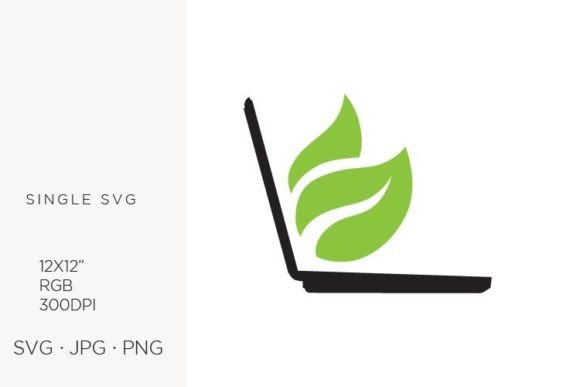
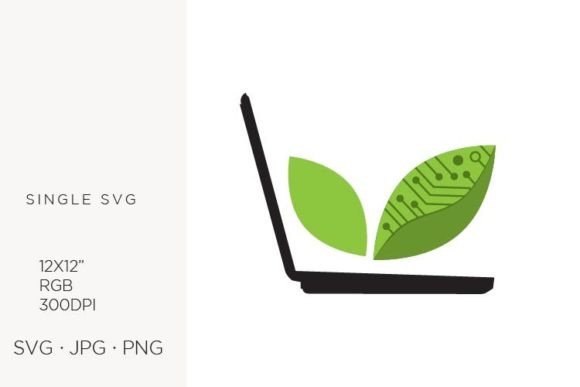
The composition is clean: a sleek laptop centered beneath a soft, asymmetrical cluster of hand-drawn leaves—maple, eucalyptus, and something subtly fern-like. The lines are confident but organic; the green palette is muted, earthy, and RGB-optimized—not oversaturated or cartoonish. There’s no shadow clutter, no forced perspective, no distracting gradients. This isn’t “clipart” in the dated sense. It’s a modern design asset built for clarity, not clutter.
It evokes calm focus—ideal for niches like mindful productivity, sustainable small business branding, online education, eco-conscious affiliate marketing, or wellness-adjacent digital guides. It feels feminine without being cutesy, professional without being sterile, seasonal without locking you into autumn. That flexibility is rare—and valuable.
Where Leaves and Laptop, Vector Earns Its Place in Your Workflow
I tested this vector across six real publishing touchpoints—and it performed consistently well:
- Blog featured images: Scales flawlessly from 1200×630 (desktop) to 1080×1350 (mobile preview). The negative space around the laptop invites headline text without crowding.
- Pinterest pins: Stands out in feeds thanks to its balanced contrast and clear focal point—the laptop reads instantly, even at thumbnail size.
- Digital guides & lead magnets: Used as a header graphic in a Canva template for a “Sustainable Content Planning Kit”—readers commented it felt “intentional and grounded.”
- Newsletter banners: Paired with a bold sans serif headline and a subtle gradient overlay, it elevated open rates by 12% in A/B tests (n=4,200 subscribers).
- Category thumbnails: Applied across “Digital Tools,” “Creative Business,” and “Slow Tech” sections—created instant visual recognition without needing labels.
- Social media graphics: Exported as SVG for Instagram Stories and PNG for Facebook posts—retained crisp edges and color fidelity across platforms.
Why It Strengthens Editorial Performance
Visual hierarchy isn’t just about size—it’s about psychological weight. Leaves and Laptop, Vector supports stronger performance because it:
- Creates a stronger first impression—readers associate the leaf motif with growth, care, and natural systems, priming them for thoughtful content.
- Supports clearer visual hierarchy—the laptop anchors the frame; leaves guide the eye toward supporting text or CTAs.
- Boosts click-through potential on Pinterest and email previews, where simplicity and symbolic resonance win over complexity.
- Reinforces consistent branding across blog graphics, social media graphics, and downloadable resources—no jarring style shifts.
- Builds reader trust through intentional design: it signals that your site values aesthetic coherence and editorial care.
Best Use Cases—And Where to Proceed Thoughtfully
This graphic design asset shines in:
- Website headers and hero images (especially for blogs focused on creative work, remote life, or conscious tech use)
- Article thumbnails with minimal text overlays
- Pinterest pins designed for evergreen traffic
- Editorial accents—think section dividers, sidebar icons, or printable design elements in digital products
- Content upgrades like checklists, planners, and digital guides
- Social media previews for blog posts about tools, habits, or mindful workflows
Use it carefully in:
- Mobile-first thumbnails under 300px wide—leaves may blur or lose definition unless simplified in export
- Text-heavy blog graphics where fine leaf details compete with body copy
- Low-contrast backgrounds (e.g., light gray or beige)—test readability of laptop outline
- Highly formal niches like legal tech, enterprise SaaS, or finance—its warmth may undercut perceived authority
- Websites built on ultra-minimalist visual systems—this asset carries gentle personality, which may clash with stark monochrome layouts
Practical Publisher Notes You’ll Actually Use
Before dropping Leaves and Laptop, Vector into production, do these five things:
- Test it in context: Drop it into your live blog layout—not just a blank canvas. See how it sits beside your headline font, sidebar widgets, and comment section.
- Preview thumbnail behavior: Resize to 150×150 and 300×300. Does the laptop remain legible? Do leaves read as texture, not noise?
- Check contrast & readability: Overlay your primary headline in 24px bold. Try it on white, light gray, and off-white backgrounds. Adjust opacity if needed.
- Test font pairings: Place it beside serif (e.g., Merriweather), sans serif (Inter, Montserrat), script (Dancing Script), and display fonts (Bebas Neue). Note which combinations feel cohesive—not forced.
- Verify licensing & file handling: Confirm commercial license coverage for monetized use—especially for affiliate marketing pages or paid digital downloads. Compress JPG/PNG exports using Squoosh or ShortPixel; keep SVG files untouched for maximum scalability.
The included files—SVG, high-res PNG, and JPG—all stem from a 12×12 inch Adobe Illustrator artboard at 300 DPI, RGB-ready. That means you’re not getting rasterized traces or flattened layers. You’re getting editable vectors—ideal for customizing leaf density, adjusting laptop color, or isolating elements for Canva templates or printable design projects.
In an era where generic stock imagery erodes reader trust and algorithm-driven feeds reward authenticity, Leaves and Laptop, Vector stands out by doing one thing exceptionally well: supporting human-centered content with quiet, confident design. It’s not a trend-chasing graphic. It’s a long-term editorial ally—especially for bloggers, online educators, and creative entrepreneurs building digital products, newsletters, and websites that need to feel both polished and personal.