Tree with Crossed Axes and Hammer: Graphics & Illustrations Review
First Impression: Rustic Authority Meets Quiet Confidence
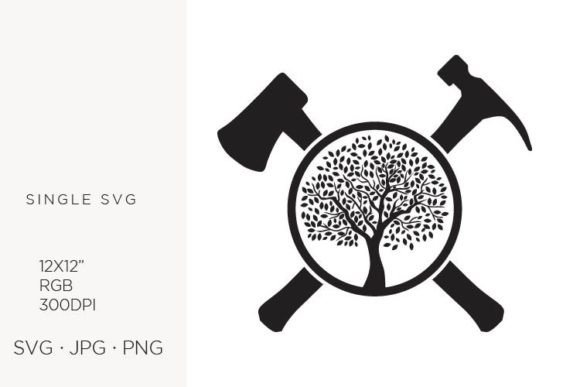
When I opened Tree with Crossed Axes and Hammer, my immediate reaction wasn’t “cute” or “trendy”—it was “grounded.” This is a graphic design asset that carries weight, not whimsy. The tree anchors the composition; the crossed axes and hammer suggest craftsmanship, resilience, and hands-on creation. It doesn’t shout—it stands. For brands rooted in sustainability, heritage trades, outdoor education, woodworking, eco-conscious product lines, or even faith-based community initiatives, this illustration lands with quiet authority. It leans into earthy authenticity without veering into cliché—and avoids the overused “lumberjack” trope by keeping clean lines and balanced negative space.
Real Campaign Fit: Launching a Seasonal Craft Subscription Box
Last month, I helped a small business launch Timber & Thread, a quarterly subscription box featuring hand-carved wooden tools and natural-fiber textiles. We needed cohesive marketing visuals—Instagram carousels, Pinterest-ready product pins, email headers, and printable unboxing inserts. Tree with Crossed Axes and Hammer became our unifying visual motif. Not as a logo (too symbolic for standalone brand identity), but as a recurring decorative element: subtly embossed on packaging tissue, scaled down in corner accents of Canva templates, and centered in hero graphics for blog posts about “tools that last.” Its 12 x 12 artboard size made it effortless to resize across formats—SVG preserved crispness on web banners, while the high-res PNG worked flawlessly in printed inserts.
Where It Strengthens Brand Communication
This illustration supports stronger first impressions and clearer visual hierarchy—especially when layered thoughtfully. On social media graphics, it adds texture without competing with headlines. In editorial design for newsletters or digital zines, it acts as a thematic anchor beside feature stories on slow living or artisanal production. As part of a design bundle, it pairs naturally with serif fonts (for heritage tone) and warm sans serifs (for modern approachability). Used as a packaging accent or product label embellishment, it signals intentionality—not mass production. And because it’s built in Adobe Illustrator and delivered as an SVG logo icon, it scales cleanly for everything from Instagram profile badges to large-format event posters.
Top 5 High-Value Uses
- Hero graphics and campaign headers—adds symbolic depth without distracting from core messaging
- Branded Canva templates—works as a consistent decorative element across social posts and lead magnets
- Pinterest pins and blog graphics—its strong silhouette ensures recognition even at thumbnail size
- Printable promotions and content kits—the RGB color palette integrates smoothly with warm, natural brand palettes
- Digital product visuals—ideal for showcasing creative marketplaces, design assets, or downloadable toolkits
Where to Proceed with Intention
This isn’t a universal drop-in solution. Avoid using Tree with Crossed Axes and Hammer in formal corporate branding where neutrality or tech-forward minimalism is expected. It can feel visually heavy in dense information layouts or text-heavy Facebook ads—let it breathe. On low-contrast backgrounds (e.g., light gray on off-white), test legibility carefully. And while it shines in small business branding and lifestyle content marketing, it may clash with ultra-minimalist or luxury aesthetics unless stylized with extreme restraint (e.g., monochrome line-only version).
Practical Designer Notes You’ll Actually Use
Before deploying Tree with Crossed Axes and Hammer in live campaigns, run these checks:
- Test it against your full brand color palette—does it harmonize with both primary and secondary hues?
- Convert to grayscale and black-and-white: does the shape retain clarity for print or accessibility use?
- Drop it into real mockups—website headers, Instagram Stories, and email banners—to assess balance and spacing.
- Preview at 24px and 48px sizes on mobile screens—does the axe/hammer detail remain legible or become muddy?
- Compare it side-by-side with competitor visuals—is it distinctive enough to support audience trust and brand recognition?
- Pair it with your top three font families (serif, sans serif, script)—which combo feels most aligned with your brand voice?
- Confirm commercial license terms—this is essential before using in client work, paid digital ads, or merchandise.
Why It Fits Creative Entrepreneurs Right Now
In a landscape saturated with AI-generated clipart and generic stock vectors, Tree with Crossed Axes and Hammer stands out as intentional creative design. It’s not just another illustration—it’s a narrative device. Bloggers gain richer editorial design. Online coaches get a visual shorthand for “building something meaningful.” Product creators find a versatile SVG design for packaging, digital ads, and branded templates. And for designers building a modern design portfolio or selling a design bundle on a creative marketplace, this asset adds tangible value: professional branding depth, cross-format flexibility, and emotional resonance.
Final Takeaway: A Thoughtful Asset, Not Just a Graphic
Tree with Crossed Axes and Hammer isn’t flashy—but it’s memorable. It doesn’t chase trends; it supports them. Whether you’re designing a sticker sheet for a maker festival, refreshing your content marketing visuals, or building a printable design kit for fellow creatives, this graphic design asset delivers consistency, craft, and quiet confidence. Used with intention, it elevates more than decoration—it strengthens how your audience feels about your brand before they read a single word.