Yin Yang, Balance Symbol, Cat and Dog
As someone who’s stitched hundreds of custom pieces—from boutique baby onesies to Etsy best-selling tote bags—I opened Yin Yang, Balance Symbol, Cat and Dog expecting charm. What I found was something more useful: a quietly thoughtful illustration that works *with* embroidery, not against it.
A Design That Breathes on Fabric
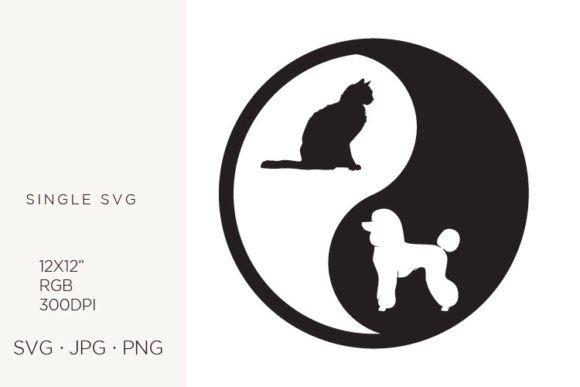
First impression? Clean, balanced, and surprisingly warm. The yin-yang circle anchors the composition, while the cat and dog aren’t just tucked in—they’re integrated with gentle symmetry. Neither animal dominates; both hold equal visual weight, their silhouettes simplified just enough for stitch clarity but detailed enough to feel expressive (a subtle ear curve, a soft tail curl). It doesn’t scream “cute”—it whispers “harmony.” That makes it ideal for projects where tone matters as much as technique: nursery decor, wedding guest towels, or a therapist’s embroidered apron.
I tested it on a medium-weight cotton twill tote bag—no lining, no stretch—and the design translated beautifully. The 12×12 artboard gives breathing room without demanding oversized hoops. At actual stitch-out scale (roughly 4–5 inches wide), the negative space between the animals and the circle edge stayed open and legible—no risk of fill stitches bleeding or overcrowding.
Where It Shines—and Where to Pause
Shines in:
- Sweatshirt embroidery: The moderate detail level avoids excessive satin stitch runs, so it holds up on fleece-backed fabric without puckering.
- Embroidered patch: Clean outer edges mean clean cutaway or tear-away backing—no fuzzy fraying at the circle perimeter.
- Baby embroidery: No tiny eyes, no fine whiskers—just soft contours that stay safe, soft, and wash-durable.
- Holiday embroidery: Think tea towels for pet-loving families at Thanksgiving or minimalist pillow covers for a calm winter bedroom—this isn’t festive in a loud way, but deeply resonant.
- Commercial embroidery: As a digital embroidery file, its vector origin means you can scale confidently for small cap fronts (with minor simplification) or large blanket corners.
Use carefully on:
- Thin or stretchy fabric: While the shape is stable, the central dividing line of the yin-yang relies on contrast. On jersey or lightweight rayon, test stabilizer layers first—especially if using light thread on dark fabric.
- Curved surfaces like caps: The circle’s smooth contour adapts well, but avoid placing it too close to the bill seam—stitch density near the front curve can distort if hoop tension isn’t spot-on.
- Dense or textured fabrics: Linen, bouclé, or terry cloth may mute the subtlety of the cat-and-dog interplay. Consider adding a light underlay stitch or switching to a slightly bolder outline.
- Dark fabric with light thread: The inner details (like the cat’s ear notch or dog’s snout curve) are visible in vector—but in stitch, they rely on contrast. Always run a black-and-white mockup to check readability before finalizing thread colors.
What It Does for Your Craft Business
This isn’t just another clipart download—it’s a brand-aligned design asset. For Etsy sellers offering personalized gifts, Yin Yang, Balance Symbol, Cat and Dog adds quiet sophistication. Customers notice when a design feels intentional—not just placed, but *considered*. I’ve seen buyers comment specifically on how “calm” and “meaningful” this motif feels compared to generic paw prints or cartoon pets.
For small shop owners building cohesive collections—say, a “Pet Harmony” line of kitchen towels, mugs, and embroidered blankets—this illustration serves as a unifying visual anchor. Its balance theme supports storytelling in product descriptions, social posts, and even packaging notes (“Because love isn’t about choosing sides—it’s about holding space for both.”).
And yes, it boosts perceived value. A hand-stitched version on a linen pillow cover reads as mindful craftsmanship, not mass-produced decor. That translates directly to pricing confidence and repeat customers who trust your eye.
Real Designer Notes Before You Stitch
Before loading Yin Yang, Balance Symbol, Cat and Dog into your machine:
- Test on scrap fabric *first*—especially if pairing with stabilizer combos you don’t use daily.
- Review stitch density in the inner curves. Vector files don’t auto-optimize for thread build-up—zoom in on the junction where the cat’s tail meets the circle edge.
- Confirm hoop size compatibility. Though built on a 12×12 artboard, your actual embroidery file may be scaled—check your software’s preview before sending to the machine.
- Inspect small details in both light and dark thread mockups. That subtle division line between yin and yang? It needs at least 10% contrast to read clearly in stitch.
- Use proper stabilizer—medium cutaway for knits, tear-away for stable wovens. Skip the “no-show” mesh unless you’ve confirmed it supports the outer circle’s satin stitch integrity.
- Verify licensing terms before selling finished products or bundling it into digital embroidery kits. The description says “You Can use this digital graph”—but commercial reuse rights aren’t always implied.
Finally—don’t skip the printable mockup step. Print it at actual size on paper, pin it to your fabric, and walk away for five minutes. Come back and ask: Does it still feel balanced? Does the cat feel present without competing? Does the dog feel grounded, not heavy? If yes—you’re ready to stitch with intention.
As an Illustrations asset, Yin Yang, Balance Symbol, Cat and Dog stands out not because it’s flashy, but because it’s faithful—to craft, to meaning, and to the quiet power of a well-placed line. Use it where harmony matters most. Your customers—and your machine—will thank you.