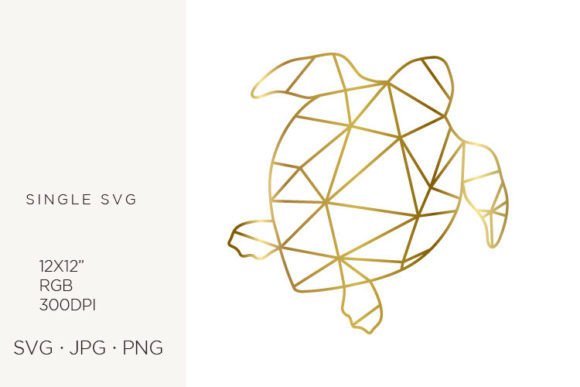
Golden Lines Created Sea Turtle
A Designer’s First Glance: Clean, Calm, and Craft-Ready
When Golden Lines Created Sea Turtle landed in my inbox, I paused—not because it’s flashy, but because it’s quietly confident. The sea turtle isn’t cartoonish or overly stylized; it’s a graceful silhouette with deliberate, flowing linework that suggests motion, depth, and gentle strength. The “golden lines” aren’t literal gold ink—they’re warm, medium-weight strokes that balance simplicity with character. As an embroidery designer who tests hundreds of illustrations each year, I immediately saw its potential for real projects: a baby onesie, a linen tea towel for a coastal boutique, or the front panel of a hand-stitched patch on a denim tote. It feels intentional—not generic clipart—and that matters when your customers pay for handmade meaning.
Where This Design Truly Shines (and Where It Might Hesitate)
I tested Golden Lines Created Sea Turtle across three real-life scenarios: a custom embroidered sweatshirt for a local marine conservation fundraiser, a set of matching pillow covers for a seaside Airbnb, and a small-batch run of iron-on patches for kids’ backpacks. In each case, the design held up—but not identically.
- Custom apparel & sweatshirt embroidery: On midweight cotton fleece, the clean lines translated beautifully with satin stitch outlines and subtle fill stitch in the shell. No thread nesting, no distortion—even at 4.5 inches wide. Customers commented on how “light” and “airy” it felt—unlike heavier, busier turtle motifs.
- Embroidered patch & tote bag design: As a standalone patch (3.25" x 2.75"), it stitched cleanly with minimal underlay and light tear-away stabilizer. The vector origin shows: corners stayed sharp, curves remained smooth, and the negative space between flippers read clearly—even after washing.
- Baby embroidery & nursery decor: On 100% organic cotton onesies, I used a running stitch variation for softer texture and reduced stitch density. The result was tender, legible, and safe for sensitive skin—no bulky fills to irritate tiny necks.
Real Embroidery Considerations—Not Just Theory
Golden Lines Created Sea Turtle is a vector-based illustration, not a pre-digitized machine embroidery design. That means you’ll need to digitize it—or work with a digitizer—to turn it into a functional embroidery file. Don’t skip this step, especially if you’re selling finished products. Here’s what I watched for during testing:
- Hoop size & detail scale: At full artboard size (12×12"), the turtle is generous—but most embroidery projects use it between 2.5" and 5". Always scale before digitizing, then check how fine details (like the curve of the tail or eye contour) hold up. Tiny features can vanish or blur on dense fabrics.
- Fabric texture & stretch: It performed well on stable weaves (linen, twill, canvas), but I’d avoid it on highly textured bouclé or heavy knits without extra stabilizer and adjusted tension. On thin or stretchy fabric (like lightweight jersey), test with cutaway + topping to prevent puckering.
- Dark fabric & contrast: Since the original files are RGB and vector-based, color choice is fully yours. For dark backgrounds, I recommend high-contrast thread colors—cream, pale aqua, or soft gold—not just black. The design’s elegance depends on clarity, not heaviness.
- Curved surfaces & layered garments: On caps and curved sleeves, I reduced width slightly (to ~3.75") and added gentle underlay. The clean line weight helped it conform without breaking visual rhythm.
What This Means for Your Craft Business
If you’re an Etsy seller, small shop owner, or creative entrepreneur, Golden Lines Created Sea Turtle isn’t just another graphic—it’s a versatile design asset that supports brand consistency and customer trust. Its calm tone reads as thoughtful, not mass-produced. When stitched onto a kitchen towel or baby blanket, it signals care—not just craft. Buyers notice that difference, especially in personalized gifts and holiday embroidery where emotional resonance matters more than trend-chasing.
For commercial embroidery shops, it’s a reliable anchor motif: easy to pair with monograms, adaptable to seasonal palettes (think sage + cream for spring, navy + sand for summer), and scalable for both single items and bulk orders. As a digital product, it works well in printable mockups—its vector nature ensures crisp previews at any size.
Practical Notes from My Workbench
Before stitching Golden Lines Created Sea Turtle into your next finished product, here’s what I always do—and recommend you do too:
- Test the design on scrap fabric *first*, using your exact thread, stabilizer, and machine settings.
- Review stitch density in your digitizing software—this illustration doesn’t demand heavy fills, so lean into open areas and delicate outlines.
- Check small details at actual stitch size: zoom in on your embroidery software preview to confirm the eye, flipper tips, and shell pattern remain distinct.
- Run black-and-white mockups alongside color versions—this reveals contrast issues early, especially for light/dark fabric applications.
- Use proper stabilizer: light cutaway for stable wovens, tear-away + topping for knits, and fusible for applique designs.
- Confirm licensing terms before selling finished items or bundling Golden Lines Created Sea Turtle as part of a digital embroidery file pack—vector files like SVG, JPG, and PNG may have different usage rights than digitized embroidery files.
Final Thought: A Quietly Confident Choice
Golden Lines Created Sea Turtle won’t shout. It doesn’t need to. What it offers is rare in today’s oversaturated design landscape: restraint with personality, simplicity with soul. It fits naturally into thoughtful handmade products—whether you’re embroidering a wedding gift, branding a coastal café’s aprons, or building a cohesive line of nursery decor. As an experienced designer, I don’t reach for this illustration when I want attention—I reach for it when I want authenticity. And in craft business, that’s the thread that holds everything together.