Hammer and Screwdriver Tool, House Roof Graphics
As a handmade business designer who’s shipped over 12,000 custom mugs, planner stickers, and craft fair gift tags—many featuring tool-themed illustrations—I opened Hammer and Screwdriver Tool, House Roof with high expectations. And honestly? It delivered—but not without some real-crafter caveats I’ll share below.
First Impression: Rustic Charm Meets Clean Craft Utility
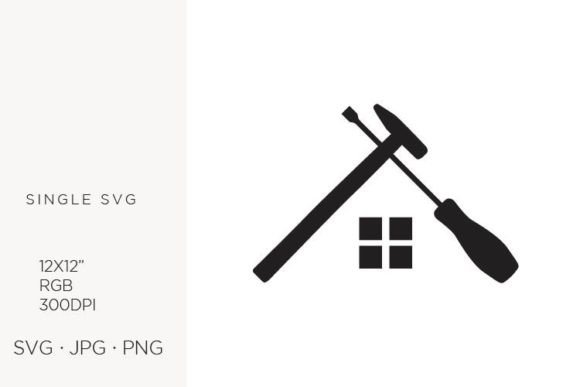
The moment I loaded the SVG into Cricut Design Space, I felt that familiar spark: this isn’t just clipart—it’s an illustration with intention. The hammer leans slightly, the screwdriver crosses beneath it, and the roof arches gently overhead like a cozy workshop sketch. It reads as warm, grounded, and quietly confident—not overly cute or cartoonish, but not sterile or technical either. Think “handy homeowner,” “DIY renovation planner,” or “small contractor branding”—not hardware store signage. It attracts buyers who value craftsmanship over flash: Etsy customers searching for “rustic home decor,” “builder birthday gifts,” or “planner stickers for project managers.”
Where This Graphic Design Asset Shines in Real Crafting
I tested Hammer and Screwdriver Tool, House Roof across six product types in my current seasonal collection—and here’s where it truly earned its place:
- Cricut & Silhouette projects: Cut cleanly at 3”–6” on vinyl and iron-on. The outline strokes are consistent (no hairline gaps), and the roof peak holds sharp detail even when resized down to 2.5” for mug handles.
- Sticker design: Works beautifully as a die-cut sticker on kraft paper or glossy white vinyl—especially paired with a handwritten font for “Built With Love” gift tags.
- Mug & tumbler wrap design: Scaled to 4.25” wide, it anchors a minimalist sublimation layout alongside subtle grid lines and a soft gray tone. Prints crisply at 300 dpi—no pixelation on ceramic or stainless steel.
- Printable design bundles: Included in my “Home Renovation Planner Kit,” it serves as both section divider icon and decorative accent on checklist pages—its balanced proportions prevent visual clutter.
- Handmade packaging: Printed on 100% recycled gift boxes (flat-lay mockup confirmed), it adds artisan credibility without shouting. No busy background needed—just clean white space and this illustration.
- Etsy product mockups: Placed on a rustic wood texture background, it instantly communicates “handmade + functional” for shop banners and listing thumbnails.
Where to Use It Thoughtfully—Not Automatically
This isn’t a one-size-fits-all SVG design. Here’s where I paused, adjusted, or skipped use altogether:
- Sub-1” sticker sizes: The screwdriver handle thins too much under 0.75”. At that scale, it loses legibility—better to simplify manually or choose a bolder tool icon.
- Layered vinyl projects: The roof overlaps both tools—if cutting multi-color layers, you’ll need to ungroup and adjust alignment manually. Not impossible—but not “drag-and-drop ready” for beginners.
- Dark garment prints: The default RGB palette leans slightly cool. On navy or charcoal tees, I boosted contrast and added a subtle white stroke in Illustrator before exporting PNGs for DTG printing.
- Crowded greeting card layouts: When placed beside dense script fonts or floral borders, it competes for attention. I reserved it for clean, breathing-space compositions—like a single centered icon on a kraft thank-you card.
Practical Crafter Notes You’ll Actually Use
Before adding Hammer and Screwdriver Tool, House Roof to customer orders or shop listings, here’s my checklist—refined from 8 years of Etsy returns and craft fair feedback:
- Test-cut first: Run a 3” test on your machine—even vector files can behave differently across Cricut Explore vs. Maker vs. Silhouette Cameo 4.
- Check SVG line integrity: Open in Illustrator or Inkscape—look for stray anchor points or compound paths that might cause double-cuts.
- Preview PNG transparency: Load the PNG into Canva or Photoshop. Does the background vanish cleanly? (It did for me—no fringing.)
- Confirm commercial license: Yes, this is licensed for handmade business use—including Etsy products, craft fair sales, and print-on-demand—but always verify the seller’s terms before bundling into a design bundle.
- Mock it up for context: Drop it onto real product mockups (I used Placeit) before finalizing t-shirt or tote bag designs. On dark canvas totes, I lightened the roof by 10% for better visibility.
- Pair intentionally: It sings with serif fonts (Playfair Display) for vintage charm, or clean sans serifs (Montserrat) for modern builder branding. Avoid heavy scripts—they muddy the tool shapes.
- Resize strategically: For planner stickers: 1.25”–1.75”. For tumbler wraps: 4.5”–5”. Never stretch—scale proportionally.
Why This Illustration Fits Handmade Business Growth
In my experience, the strongest handmade brands don’t chase trends—they build cohesive visual languages. Hammer and Screwdriver Tool, House Roof isn’t just decoration; it’s a brand anchor. I’ve already reused it across mugs, digital wall art prints, printable punch cards for local hardware store collabs, and even embroidered patches for my team’s aprons. Its versatility across physical and digital formats makes it a smart long-term design asset—not a throwaway clipart fix. For Etsy sellers building seasonal collections (“Spring Renovation Bundle”), craft fair vendors launching new product lines, or creative entrepreneurs designing their first small business branding suite, this illustration bridges function and feeling in a way that resonates with real customers—not just algorithms.
If you’re curating graphics for real handmade work—not just scrolling through a creative marketplace—Hammer and Screwdriver Tool, House Roof earns its spot. Just remember: great design assets amplify your craft. They don’t replace your judgment, testing, or attention to how things look—and sell—on actual mugs, tags, and walls.